
Everyday Living
Plan Your First Theater Visit Around the Performance and the Venue
Prepare for live theater with clear ticket details, access arrangements, travel plans, and considerate audience habits.
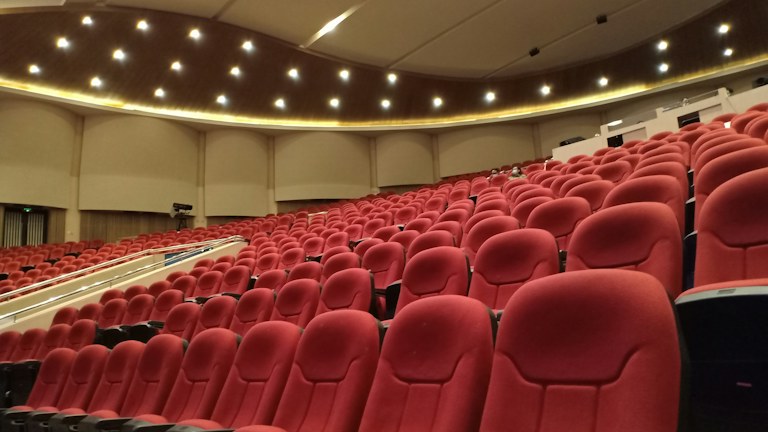
Photo: Edwin Petrus / Unsplash. Stock photograph for illustration.
In this guide
- Choose a performance for your actual interests
- Understand the ticket and the seat
- Arrange access needs early
- Plan the journey and a realistic arrival
- Dress and pack for comfort within the venue's rules
- Settle in before the performance begins
- Watch with curiosity rather than checking your knowledge
- Finish the evening with a little room to reflect
A first theater visit is easier to enjoy when the practical questions are settled before the lights go down. You do not need specialist knowledge or a formal outfit chosen from a stereotype. You need to know what you are seeing, where you are going, and what the venue expects. A little preparation leaves more attention for the performance itself and less for searching an email while a queue forms behind you.
This guide covers an ordinary audience visit to a live theater performance. The details vary by production and venue, so check current information directly before booking and again before traveling. Treat general advice as a starting point, with the venue's own instructions guiding ticket access, entry, accessibility arrangements, and conduct during the show.
Choose a performance for your actual interests
Read a clear description of the production and consider what attracts you: a story, music, a performer, a subject, or the experience of live theater itself. You do not have to choose the most famous production for a first visit. A smaller performance that suits your interests and schedule can be a better introduction than an expensive event you feel obliged to admire.
Check the stated running time, interval information, age guidance, and any content or sensory information relevant to your group. These details can help you make an informed choice without reading a complete plot summary. If you prefer to avoid spoilers, look for practical information separately from reviews. You can arrive curious while still knowing whether the length and format are suitable for the people attending.
Understand the ticket and the seat
Use the venue or an authorized seller, and read the current ticket conditions before paying. Confirm the exact date, time, location, number of tickets, and any restrictions. A production may appear at several venues or have both afternoon and evening performances. Check the final booking summary carefully rather than relying on the page you initially opened.
Study the seating information and any notes about restricted views or access. A lower price may reflect a particular limitation, but do not guess what that means for the experience. Ask the venue if the description is unclear. Verify current exchange, cancellation, and delivery terms directly with the seller. Keeping those details together makes it easier to address a problem through the correct channel if plans change.
Arrange access needs early
Review the venue's accessibility information and contact it with specific questions when needed. Ask about the route to the seat, stairs, available facilities, seating arrangements, or supported performances relevant to your needs. A building photograph or a general accessible label may not answer the question that matters to your visit. The venue can explain the actual arrangements and any advance booking requirements.
If attending with someone else, discuss practical preferences without making assumptions for them. They may know exactly what information they need or prefer to contact the venue themselves. Keep the planning focused on enabling the visit. Confirm any agreed arrangements before the day so arrival does not become an unnecessary series of explanations at a busy entrance.
Plan the journey and a realistic arrival
Check the route, likely travel time, and current transport or parking information. Allow room for ordinary delays and the time needed to find the entrance, check tickets, and reach the seat. Follow the venue's recommended arrival guidance rather than aiming to walk in at the printed start time. A first visit often involves a little more orientation than returning to a familiar building.
Save the ticket or delivery instructions in the form the venue accepts, and make sure the device or printed copy will be usable. Keep the booking reference available without exposing it unnecessarily. If tickets are being collected, confirm what identification or payment information is required. Share the meeting point with companions so one delayed person does not leave everyone searching different entrances.
Dress and pack for comfort within the venue's rules
Check for any stated dress or bag requirements, but do not assume theater always requires formal clothing. Choose something appropriate to the venue and comfortable for sitting through the performance. Consider the journey as well as the auditorium, especially if you will be walking or waiting outdoors. Bring only what you can manage comfortably within the venue's permitted storage arrangements.
Review rules on food, drinks, large bags, photography, and prohibited items before arriving. Avoid assuming another theater's policy applies here. If you need to bring something for access or medical reasons, ask the venue about the appropriate arrangement in advance. The aim is to avoid surprises at entry, not to prepare an elaborate kit for every imaginable situation.
Settle in before the performance begins
Find your seat and locate the facilities you may need while there is time. Read or listen to the venue's instructions about phones, recording, and the interval. Silence devices in a way that will not produce unexpected sounds, and keep screens from lighting up during the show. Follow the production's guidance if an unusual interactive format invites audience participation.
If you are late, follow staff instructions about when and how entry is possible. Do not attempt to move through the auditorium in a way that disrupts the performance or other audience members. During the show, keep conversation and unnecessary movement to a minimum. You can react naturally to what is happening while remaining aware that people nearby are also trying to hear and see the same live event.
Watch with curiosity rather than checking your knowledge
You do not need to identify every theatrical technique or understand every reference immediately. Notice what draws your attention: a change in lighting, a pause, the use of space, or the relationship between performers. Live theater can communicate through movement and timing as much as through dialogue. Let the experience unfold before deciding whether you have understood it correctly.
If something is unclear, hold the question for later rather than searching your phone during the performance. At the interval, you can compare impressions quietly with companions without requiring everyone to agree. Avoid turning the visit into a test of cultural knowledge. A personal response grounded in what you noticed is more meaningful than repeating a review you think you are supposed to share.
Finish the evening with a little room to reflect
Plan the return journey with the approximate finish time in mind, allowing for the performance to vary from a perfectly timed schedule. If you meet others afterward, choose a clear place outside the main flow of departing audience members. Check belongings before leaving and follow the venue's directions as the auditorium empties.
Later, note one moment you remember and one question the performance left you with. Read about the production or discuss it if that adds to your enjoyment. You do not have to decide whether it was a masterpiece to make the visit worthwhile. The useful outcome is a well-managed evening and a clearer sense of the kinds of live performance you might want to experience next.