
Learning
Separate What You Observe from What You Think It Means
Separate visible details from interpretations, compare explanations, and ask what evidence would change your mind.
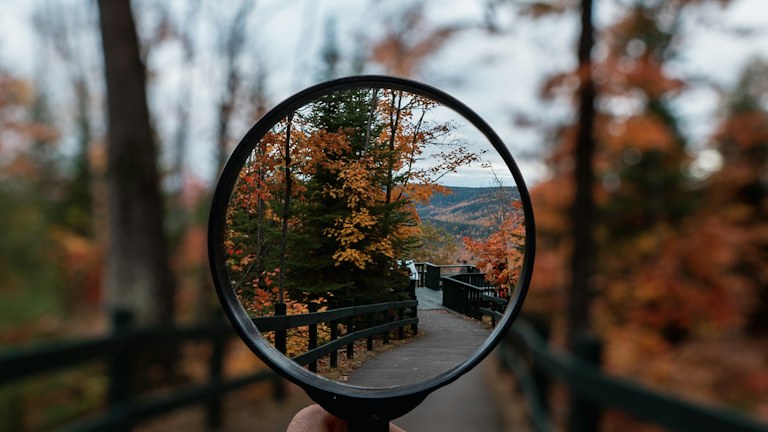
Photo: Steven Wright / Unsplash. Stock photograph for illustration.
In this guide
- Begin with a small, ordinary scene
- State the conditions of your observation
- Write the inference as a separate sentence
- Generate more than one plausible explanation
- Look for evidence that could distinguish the explanations
- Practice with images and short descriptions
- Use the distinction in everyday conversations
- Keep a short record of revisions
You see a line outside a shop and assume the service is slow. You notice a plant leaning toward a window and decide it needs moving. You read a short message and conclude that the sender is annoyed. In each case, something observable has been combined with an explanation. That combination is normal, but it becomes easier to reason carefully when you can separate the two parts.
Observation describes what you can directly notice or record in a particular situation. Inference is the interpretation you draw from those observations. Both are useful. The aim is not to stop making inferences, but to make them visible, proportionate, and open to revision. A few simple exercises can help you practice that distinction in everyday learning and communication.
Begin with a small, ordinary scene
Choose something low stakes: a desk, a public noticeboard, a view from a window, or an object on a table. Spend a minute looking without trying to explain why things are arranged that way. Record details that another person could reasonably check, such as colors, positions, visible marks, or the number of objects. Avoid photographing people or private information merely to create an exercise.
Then read your notes and identify words that carry interpretation. Messy, neglected, expensive, and cheerful may express a judgment rather than a direct description. Replace one with the details behind it. Instead of neglected plant, you might write three leaves have brown edges and the potting surface looks dry. The revised statement is more specific and leaves the cause open.
State the conditions of your observation
An observation is made from a particular position, at a particular time, using particular means. You may be looking through glass, hearing only part of a conversation, or reading a cropped photograph. Record relevant limits. A view from across a room does not support the same detail as a close inspection, and a brief glimpse may not represent what happens over an entire day.
This does not make the observation useless. It tells you how much weight to place on it. Saying that a room was empty when you passed at noon is more careful than saying nobody uses the room. The first statement describes an event you witnessed. The second extends beyond it. Noticing that extension is the central habit you are practicing.
Write the inference as a separate sentence
After describing the scene, write what you think it might mean. Use language that matches your confidence. A queue may suggest a busy period, a special event, or a slow checkout process. You can favor one explanation while still labeling it as an interpretation. That makes it easier to discuss the reasoning without confusing disagreement about the cause with disagreement about what was seen.
Ask which observation supports the inference. If you cannot point to a specific detail, you may be relying on a prior expectation. Prior knowledge can be useful, but it should be recognized as a separate source. Write it down if it matters. Perhaps you have seen the same queue several times, or you know an event is scheduled. Those are additional pieces of evidence, not part of the original glimpse.
Generate more than one plausible explanation
Choose an inference you made quickly and write two alternatives. If someone has not replied to a message, they may be busy, away from their device, unsure of the answer, or waiting for more information. The exercise is not to invent endless possibilities. It is to prevent the first explanation from becoming certain simply because it arrived first.
Keep alternatives plausible in the circumstances. An explanation that requires many unsupported assumptions should not receive the same weight as one that fits the available evidence well. Compare what each explanation accounts for and what it leaves unexplained. This makes the exercise more useful than merely announcing that anything is possible. Careful thinking involves weighing explanations as well as producing them.
Look for evidence that could distinguish the explanations
Ask what additional information would help. For the queue, you might observe whether it moves steadily or read a notice about a special event. For a confusing instruction, you might ask the writer what they intended. Choose a small, appropriate next step rather than collecting information without a question. Respect privacy and ordinary boundaries while doing so.
Also ask what would make you change your mind. If every possible observation seems to confirm your preferred explanation, the claim may be too vague to test. A useful inference should have some connection to evidence that could support or weaken it. You do not need a formal experiment for every everyday decision, but you can still identify what information would be genuinely informative.
Practice with images and short descriptions
Use a photograph from a source that provides context, or describe a scene to a friend without showing it immediately. Separate visible details from assumptions about the people, location, or events. A person looking downward is observable in an image; being sad may be an interpretation. Clothing, posture, and expression can suggest possibilities without proving a person's intentions or circumstances.
Then reveal the accompanying context and compare it with your initial reading. Notice which assumptions were reasonable, which were unsupported, and which came from stereotypes or familiar story patterns. Do not turn the exercise into a contest to make the fewest guesses. The purpose is to become aware of how quickly a coherent story can form from a small amount of information.
Use the distinction in everyday conversations
When raising a concern, begin with the specific event you observed and then explain your interpretation or question. For example, you can say that the shared document still shows last week's date and ask whether it has been updated. That is more useful than beginning with a broad accusation about carelessness. It gives the other person something concrete to confirm or correct.
Listen for the same distinction in their response. They may provide context you did not have, or they may agree on the observation while offering another explanation. You can then discuss the actual uncertainty. This approach does not eliminate disagreement, but it reduces the chance that a conversation becomes an argument about an assumption presented as an established fact.
Keep a short record of revisions
For a week, note one small instance in which new information changed your interpretation. Record the original observation, your first inference, the additional evidence, and the revised view. Choose ordinary situations rather than turning the exercise into surveillance of other people. The record can be brief enough to fit in a few lines.
Look for patterns in your own reasoning. Perhaps you often assume delay means disinterest, or you interpret a single example as a general rule. Recognizing a pattern gives you a useful pause point next time. The goal is not perfect certainty before acting. It is a clearer relationship between what you know, what you suspect, and what you still need to find out before making a stronger claim.